LinkedIn AI Search: Optimizing Professional Networking in 2026
HyppeSocial November 16th, 2025 LinkedIn
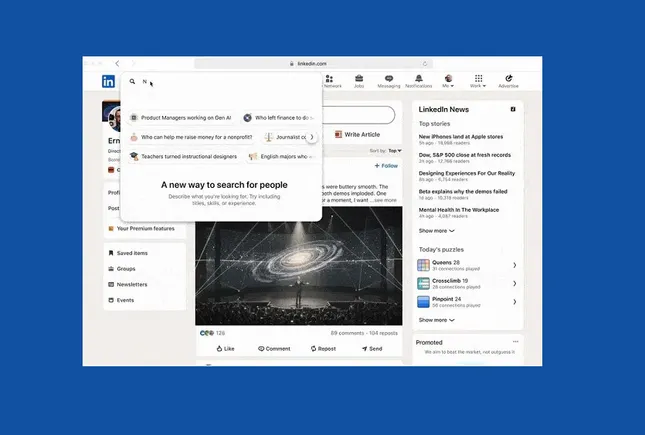
LinkedIn is advancing professional networking with the introduction of its AI-powered conversational search. This new functionality allows users to employ natural language queries to discover relevant members, pages, and posts within the platform. The integration of artificial intelligence into search tools marks a significant evolution in how professionals connect and identify opportunities.
Traditionally, finding specific individuals or information on professional networks required precise keyword matching and extensive filter adjustments. The updated LinkedIn AI search capability aims to streamline this process, enabling a more intuitive and efficient experience. This feature reflects LinkedIn's ongoing commitment, supported by parent company Microsoft's substantial investments in AI, to embed intelligent tools across its platform.
Understanding LinkedIn's Conversational AI Search
The core of LinkedIn's new search enhancement lies in its ability to process conversational queries. Instead of inputting rigid keywords, users can now describe their needs in plain language. For instance, a query such as “ex-coworkers who became founders in healthcare in NY” or “angels with FDA experience for an early biotech” can yield highly specific results that would be challenging to obtain through conventional search methods.
Tomer Cohen, LinkedIn’s Chief Product Officer, highlighted this shift: “Describe what you need in your own words, and we’ll surface the people who can help across your network. Type it like you’d say it.” This approach moves beyond simple data retrieval, aiming for a deeper understanding of user intent and context. The system is designed to identify individuals and entities that align with complex, multi-faceted criteria, potentially offering a more relevant match than manual filtering.
While the primary focus is on finding people, the conversational AI search is also expected to apply to other elements within the platform, such as specific posts or company pages, based on the context of the query. This adaptability is crucial for a professional network where information discovery spans various content types.
Practical Applications for Professionals
The integration of conversational AI search offers several practical advantages for individual professionals seeking to enhance their LinkedIn experience:
- Targeted Networking: Quickly locate specific individuals in your extended network. This could include former colleagues who have transitioned into particular roles or industries, potential mentors with unique experience, or collaborators for new projects. For example, a query like “connect with software engineers specializing in machine learning in Seattle” can help identify relevant individuals more directly.
- Career Advancement: Identify industry leaders, niche experts, or professionals who have successfully navigated specific career paths. This can be valuable for informational interviews, seeking advice, or understanding career trajectories within a particular field.
- Personalized Learning and Development: Find individuals who can provide insights into specific skills, technologies, or industry trends. This facilitates peer-to-peer learning and access to specialized knowledge that might otherwise be difficult to uncover.
To make the most of this feature, professionals should articulate their search intent clearly and include specific details relevant to their desired outcome. The more precise the conversational query, the more refined the results are likely to be.
Business and Talent Acquisition Advantages
For businesses and recruiters, the LinkedIn AI search tool represents a powerful resource for talent acquisition, business development, and market intelligence:
- Refined Talent Discovery: Recruiters can use conversational queries to pinpoint candidates with highly specific skill sets, experience combinations, or demographic profiles. An example could be “Spanish-speaking school counselors in Austin focused on learning differences,” which identifies a niche professional group that would be time-consuming to find through traditional filters. This allows for more precise sourcing and reduces the time spent on sifting through irrelevant profiles.
- Strategic Business Development: Sales teams and entrepreneurs can identify potential partners, investors, or leads based on intricate criteria. For instance, searching for “angel investors in fintech with a background in regulatory compliance” could help connect with individuals possessing both financial capacity and relevant industry knowledge.
- Competitive and Market Intelligence: By searching for specific roles within competitor companies or identifying professionals with particular expertise in emerging markets, businesses can gain valuable insights into industry trends and talent landscapes.
This AI-driven approach enhances the efficiency of professional outreach and resource allocation, enabling organizations to make more informed decisions based on granular data.
Considerations and Ethical Aspects
While the potential benefits of conversational AI search are substantial, it also introduces considerations around data privacy and the ethical use of information. The original article highlights the historical challenges faced by features like Facebook’s Graph Search, where users could inadvertently uncover sensitive or less-than-ideal information about their connections.
LinkedIn's environment, being a professional network, inherently encourages users to present their best professional selves. This context suggests that the risk of uncovering deeply embarrassing personal information may be lower than on more general social media platforms. Nonetheless, the ability to cross-match profile data with past posts could still lead to unexpected discoveries.
To address these concerns, LinkedIn's AI search capabilities are designed to operate within the bounds of publicly available profile information and content shared on the platform. The platform's developers must ensure that the AI respects user privacy settings and does not surface information that users have intentionally restricted. Transparency regarding how search results are generated and what data sources are utilized will be key to building user trust.
Maximizing Your Visibility for LinkedIn AI Search
With the advent of more sophisticated search capabilities, optimizing your LinkedIn profile becomes even more critical. To ensure your profile is discoverable through conversational AI queries, consider these actions:
- Keyword-Rich Profile: Populate your profile with relevant keywords that accurately describe your skills, experience, and industry. Think about how a recruiter or collaborator might phrase a query to find someone with your background.
- Detailed Experience and Skills: Provide comprehensive descriptions of your past roles, responsibilities, and achievements. The more detail, the more data points the AI has to match against complex queries. List all pertinent skills, endorsements, and certifications.
- Engage Authentically: Actively participate in discussions, share insightful posts, and comment thoughtfully. This not only builds your professional brand but also creates content that the AI can index and associate with your expertise.
- Regular Updates: Keep your profile current with your latest career developments, projects, and skills. An up-to-date profile ensures the AI has the most accurate information to present you as a relevant match.
These strategies go beyond basic profile completion, aiming to create a robust digital footprint that is easily understood and indexed by advanced AI algorithms.
The Future of AI in Professional Platforms
Microsoft's continued investment in AI underscores a broader strategy to embed intelligent functionalities across its ecosystem, including LinkedIn. This suggests that the conversational search is just one component of a larger AI integration initiative. LinkedIn has previously rolled out AI-powered job discovery tools, offering job seekers more tailored recommendations based on their profiles and preferences.
However, the emphasis should remain on responsible AI use. While AI can significantly enhance discovery and efficiency, professionals should exercise caution against misusing AI for generating content that misrepresents their actual skills or capacity. Authenticity remains paramount in professional networking. AI should serve as a tool to augment genuine human interaction and capability, not to replace or mask it.
The updated LinkedIn AI search option is currently available for all LinkedIn Premium subscribers in the U.S. and is expected to roll out to all members soon. This phased deployment allows for refinement and ensures a stable experience as the feature becomes more widely accessible.
In conclusion, the introduction of AI-powered conversational search on LinkedIn represents a notable step in enhancing professional connectivity. By enabling more natural and specific queries, it empowers users to find precise connections and opportunities with greater ease. For both individuals and organizations, leveraging this feature effectively will be crucial for optimizing professional networking and talent discovery in the evolving digital landscape of 2026.