LinkedIn Collaborative Posts are Redefining Professional Authority
HyppeSocial June 23rd, 2026 Social Media Marketing
The Evolution of Professional Social Proof
The professional landscape is no longer defined by solo voices producing content in isolation. Success in the modern business world is almost always a byproduct of collective effort, and the platforms we use are finally starting to reflect that reality. The recent announcement regarding collaborative posts signals a tectonic shift in how authority is established and shared across the network.
By allowing creators to invite other members to co-author in-stream posts, the platform is acknowledging that the most impactful stories—product launches, executive news, or brand partnerships—are rarely the work of a single individual. This update moves away from the traditional model of tagging and toward a model of shared ownership.
Understanding the Mechanics of Co-Creation
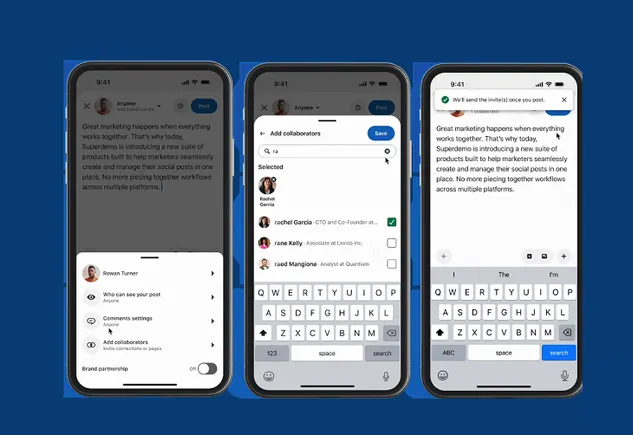
The functionality is strategically potent while remaining integrated into the existing user experience. Within the post settings in the composer, users will find a new option to add collaborators. This allows creators to invite another individual or a company page to partner on a specific piece of content.
Once the invited party accepts, both names appear prominently at the top of the post. This dual attribution provides immediate clarity to the audience regarding the relationship between the parties involved. Currently being tested among a select group of creators, the feature is scheduled for a wider rollout over the coming months, promising to change the standard operating procedure for professional updates.
Expanding Reach Through Dual Networks
The primary hurdle for many B2B brands is the limited organic reach of company pages. Personal profiles consistently outperform brand accounts because the algorithm prioritizes human connection over corporate broadcasts. Collaborative posts bridge this gap by allowing a brand and an executive to co-author a post, accessing the combined algorithmic weight of both networks.
This shared reach is a massive advantage for content distribution. Instead of a brand posting a piece of news and asking employees to share it, the company and the key individual can own the moment together. This ensures the content appears in the feeds of both sets of followers, effectively doubling the initial visibility window without additional ad spend.
Integrating with the Creator Economy
This update does not exist in a vacuum. It follows a series of aggressive moves to support creator monetization and brand-creator relationships. Recent developments like the launch of a dedicated marketplace and the ability for brands to sponsor organic user content show a clear trajectory toward a more influencer-friendly ecosystem.
Collaborative posting simplifies the logistics of professional partnerships. It provides a formal structure for brand deals and joint ventures, making it easier for companies to capitalize on the credibility of industry voices. By formalizing these partnerships through co-authored posts, the platform is creating a more transparent and professional environment for sponsored content.
Strategic Applications for B2B Organizations
Marketing teams must move beyond simple tagging and adopt a more sophisticated approach to relationship management. This feature demands a strategy that prioritizes high-value partnerships and internal advocacy. Consider these high-impact applications:
- Executive Thought Leadership: When a CEO and the company page share a major announcement together, it humanizes the brand while maintaining corporate authority.
- Product Launches: Featuring the lead engineer or designer as a co-creator on a product update adds a layer of technical credibility.
- Partner Marketing: Co-branded initiatives or joint whitepapers can now be shared by two partner organizations simultaneously, ensuring both get equal credit and reach.
- Employee Recognition: Celebrating milestones becomes more powerful when the company and the employee are listed as co-authors on the achievement.
Building Authority Through Digital Association
The psychology of association is a powerful driver of digital trust. When a recognized industry leader co-signs a post with a niche brand or a rising professional, a significant amount of authority is transferred to the partner. This reduces the friction of audience acquisition and speeds up the trust-building process in a crowded marketplace.
This feature is not merely a tool for reach; it is a structural mechanism for the transfer of credibility. As the platform moves toward a more collaborative future, the most successful users will be those who understand how to build a network of co-creators rather than just a list of followers. Preparing for this rollout requires an audit of current partnerships and a plan to utilize shared authority to break through the noise of the standard professional feed.