Why Your Marketing Funnel Needs to Become a Flywheel
HyppeSocial July 7th, 2026 Social Media Marketing
The end of linear customer journeys
Traditional marketing funnels treat buyers like water running through a pipe. You pour them in at the top via awareness, they trickle down through consideration, and they eventually spill out as sales at the bottom. This approach assumes your customers are passive, predictable, and willing to move in a straight line. Modern buying behavior proves otherwise.
Consider your own habits. You might discover a brand through a creator, then search for them on a secondary platform, check forums for authentic user reviews, and finally buy after a friend shares a link in a private message. You loop back, pause, compare, and vanish into dark social channels before emerging ready to commit. The linear funnel ignores this complexity, leaving brands unable to track or influence the actual path to purchase.
The limitations of the funnel model
Legacy funnels were designed for a era where brands controlled the narrative. Today, the sheer volume of AI-generated content has made polished, one-way messaging easy to ignore and harder to trust. Audiences are hungry for proof of reality—evidence that real people have vetted your brand and found it worthwhile. When your model focuses solely on pushing leads toward a transaction, you miss the opportunity to build the brand equity that secures long-term growth.
Search behavior has also shifted. While traditional search engines remain relevant, a significant portion of discovery now happens directly on social platforms. When users search for experiential feedback, they bypass conventional websites entirely to see how people actually interact with a product. If your strategy is trapped in a linear pipeline, you are losing influence before the potential buyer even engages with your content.
Adopting the flywheel approach
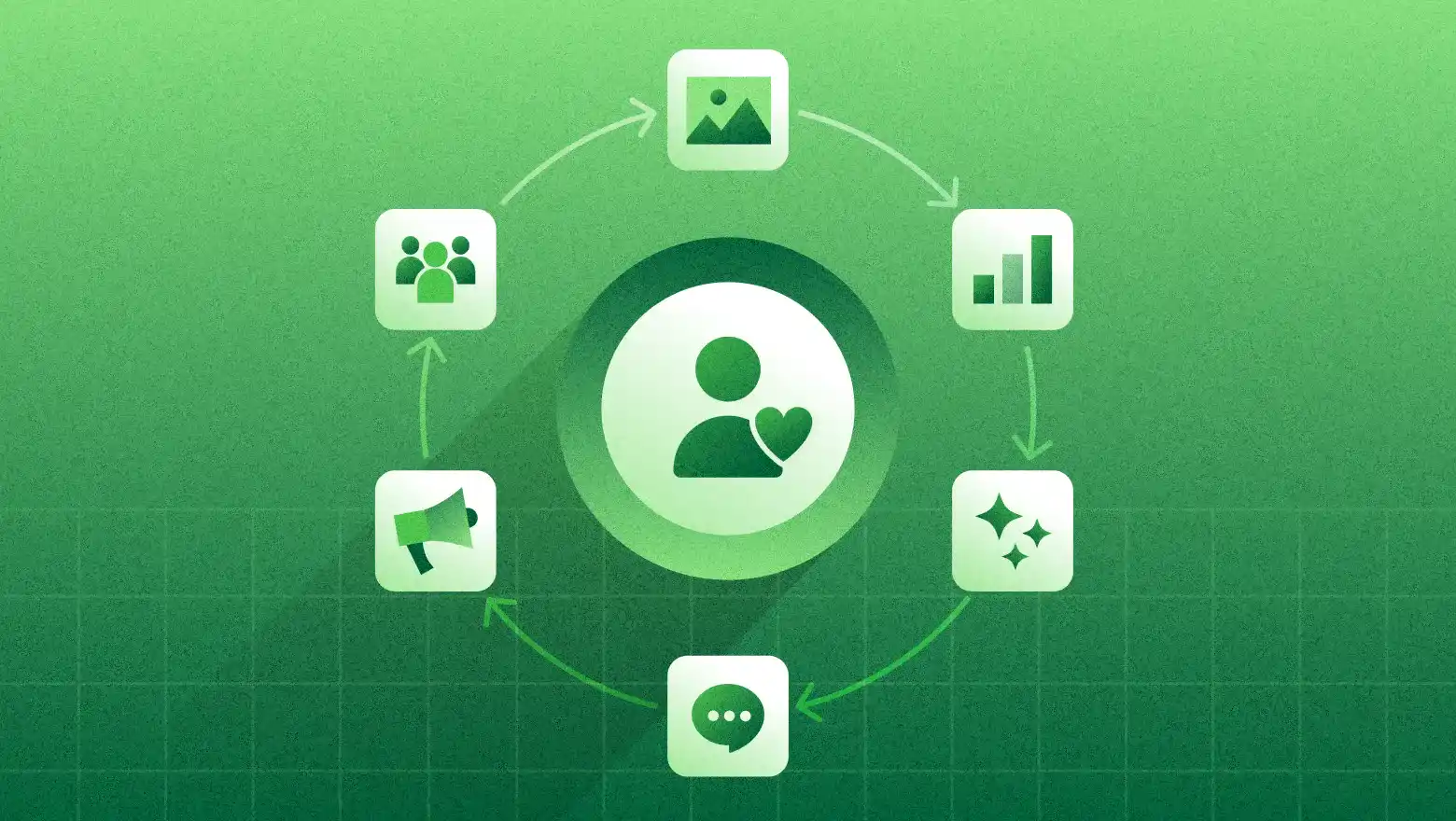
The transition to a flywheel model replaces the drop-off points of a funnel with a recurring, self-sustaining loop. Momentum builds as every action fuels the next, turning engagement into long-term visibility. This system relies on three interconnected pillars that keep the cycle spinning.
First, prioritize social intelligence. Use data to identify the specific questions your audience is asking. Stop guessing what they want to hear and start observing the communities and conversations that actually shape their decision-making process. This provides the roadmap for every piece of content you produce.
Second, focus on human-validated content. Generic, automated output is no longer a viable strategy for capturing attention. Create content that feels earned and authentic. By grounding your messaging in actual customer experiences, you improve your standing within search results and AI-driven platforms, which prioritize content that provides genuine utility.
Third, build influence networks. Your credibility should extend beyond your own channels. Partner with creators and participate in niche spaces where your audience already gathers. When real people advocate for your brand, that engagement feeds back into your social intelligence pool, creating a cycle that strengthens with every rotation.
Building for compound momentum
Shifting away from the funnel isn't just about changing terminology. It is about rethinking how you measure success. If you only look at conversion rates at the end of a process, you miss the compounding effect of community trust and brand advocacy. The flywheel turns every single engagement into fuel for the next cycle, making your brand more resilient against shifts in platform algorithms or discovery habits.
Start by auditing where your brand currently leaks value. If customers are dropping off during the consideration phase, it is likely because they cannot find authentic proof of your product's value. Replace the static messaging in that stage with user-generated insights and community-based interactions. When you align your strategy with the way people actually research and buy today, you stop fighting for attention and start building a sustainable engine for growth.