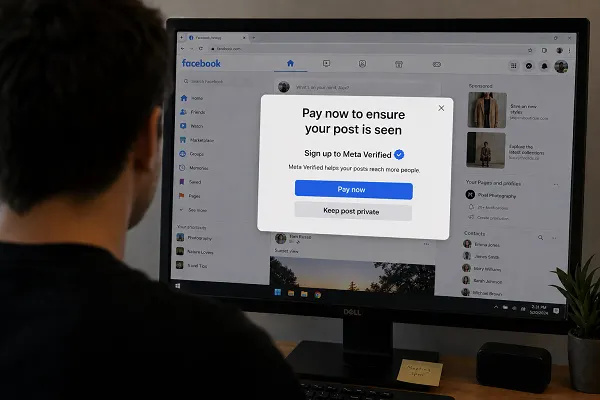
The End of the Free Social Era: Why Subscriptions are Becoming Mandatory
HyppeSocial June 1st, 2026 Social Media Marketing
The Collapse of the Free Access Model
The unspoken contract of the social media age is beginning to disintegrate. For nearly two decades, the digital landscape operated on a simple premise: users provided their data and attention, and in exchange, platforms provided a global stage for free. This arrangement allowed tech giants to scale to billions of users, but the economic realities of 2026 are forcing a radical pivot. The shift from ad-supported reach to pay-to-play ecosystems is no longer a fringe theory; it is a corporate mandate.
Driving this change is a collision of two massive forces: the astronomical cost of artificial intelligence and the industrial-scale proliferation of bot networks. These factors have made the traditional, wide-open social network an expensive and increasingly dangerous liability. While the transition to paid access is met with significant user resistance, the financial architecture of the internet suggests that the age of the free lunch is effectively over.
The Bot Problem and the Verification Tax
Security is the primary justification used by platform owners pushing for mandatory fees. The argument rests on the fact that artificial intelligence has made it trivial for malicious actors to deploy millions of human-like profiles for almost no cost. When creating an account is free, bot armies can manipulate public discourse, skew marketing data, and overwhelm moderation systems. Introducing even a nominal fee changes the economics of deception entirely.
By attaching a cost to every profile, platforms can increase the financial burden on bot farm operators by several thousand percent. This friction makes it significantly easier to identify genuine users through credit card clustering and phone verification. The strategy moves social media away from being an open square and toward a gated community where a financial footprint serves as the ultimate credential. In this new paradigm, paid verification is viewed not as a luxury, but as the only viable defense against a completely automated and synthetic feed.
The Hidden Infrastructure of Artificial Intelligence
Beyond security concerns, the sheer cost of maintaining modern social features has skyrocketed. Integrating sophisticated generative tools and advanced recommendation engines requires immense computational power. Running massive language models and real-time AI image generation is exponentially more expensive than serving traditional text and static images. Ad revenue, while still substantial, is struggling to keep pace with the capital expenditures required for this new era of compute.
Subscription packages are increasingly being framed as 'AI add-ons' to recoup these costs. These tiers provide users with enhanced creative tools and smarter search capabilities, but they also serve as a vital revenue stream to fund the underlying hardware. As platforms invest billions into GPU clusters and data centers, they are realizing that the old model of 98% ad-based income is too volatile. Diversification through direct user billing is the only way to sustain the level of innovation that modern audiences demand.
The Resistance to Paid Social
Despite the logic from a corporate perspective, the actual adoption of paid social media remains remarkably low. Current data indicates that only a tiny fraction of any given platform's user base is willing to pay for a service they once accessed for free. YouTube has managed to convert roughly 4.5% of its audience to its premium tier, while other major players struggle to even reach the 1% mark. This gap between corporate necessity and user expectation is the biggest hurdle for the industry.
The risk for companies like Meta is the potential loss of network effect. Their value is derived from their massive reach; if a paywall drives away hundreds of millions of users, the platform becomes less attractive to the advertisers who still provide the bulk of the revenue. This creates a delicate balancing act where platforms must offer enough value in their paid tiers to justify the cost without alienating the free users who keep the ecosystem alive. We are likely heading toward a tiered reality rather than a total paywall.
The Future of the Gated Digital Square
Expect to see a widening gap between the free and paid user experience. The free tiers of the future will likely be characterized by heavier ad loads, limited reach, and a higher prevalence of unverified content. Meanwhile, the paid experience will offer a cleaner interface, prioritized visibility, and access to the most advanced tools. This fragmentation will fundamentally change how we communicate and how brands approach digital marketing.
- Tiered Visibility: Paying users will likely receive algorithmic priority in comments and search results.
- AI Exclusivity: Premium features will include advanced generative capabilities that are too expensive to offer for free.
- Verification Standards: The 'blue check' will evolve from a status symbol into a basic requirement for meaningful interaction.
The transition is painful, but the direction is clear. The digital landscape is moving toward a model where your presence on a platform is a subscription service rather than a right. As the costs of compute continue to climb and the war against bot networks intensifies, the price of staying connected will become a standard line item in every digital consumer's budget.