Corporate Reputation Management: Social Listening for Trust
HyppeSocial November 20th, 2025 Social Media Strategy
Corporate Reputation Management: Social Listening for Trust
Cultivating a positive brand reputation requires consistent effort across all customer touchpoints. Despite years of meticulously building trust and delivering exceptional service, a single viral post can threaten to dismantle that hard work almost instantly. This challenging reality is increasingly common for businesses; the Axios Harris Poll indicates that 46% of corporate reputations saw a decline between 2019 and 2025.
Navigating online sentiment can feel daunting, but proactive **corporate reputation management** strategies empower organizations to control their brand's narrative. By actively monitoring and engaging with digital conversations, companies can protect their image and build lasting public trust.
What is Corporate Reputation Management?
Corporate reputation management is the strategic process of influencing and safeguarding how the public perceives your brand. This practice encompasses vigilant monitoring of online conversations, prompt resolution of customer issues, and the amplification of positive brand mentions to shape a favorable public perception. Essentially, it's about proactively ensuring your brand's image aligns with its values and actions.
While often used interchangeably, corporate reputation management and online reputation management are closely related, with the latter emphasizing digital interactions. For contemporary brands, the digital aspect is crucial, as online discussions significantly impact brand perception. Customers now expect brands to be actively listening on social media platforms.
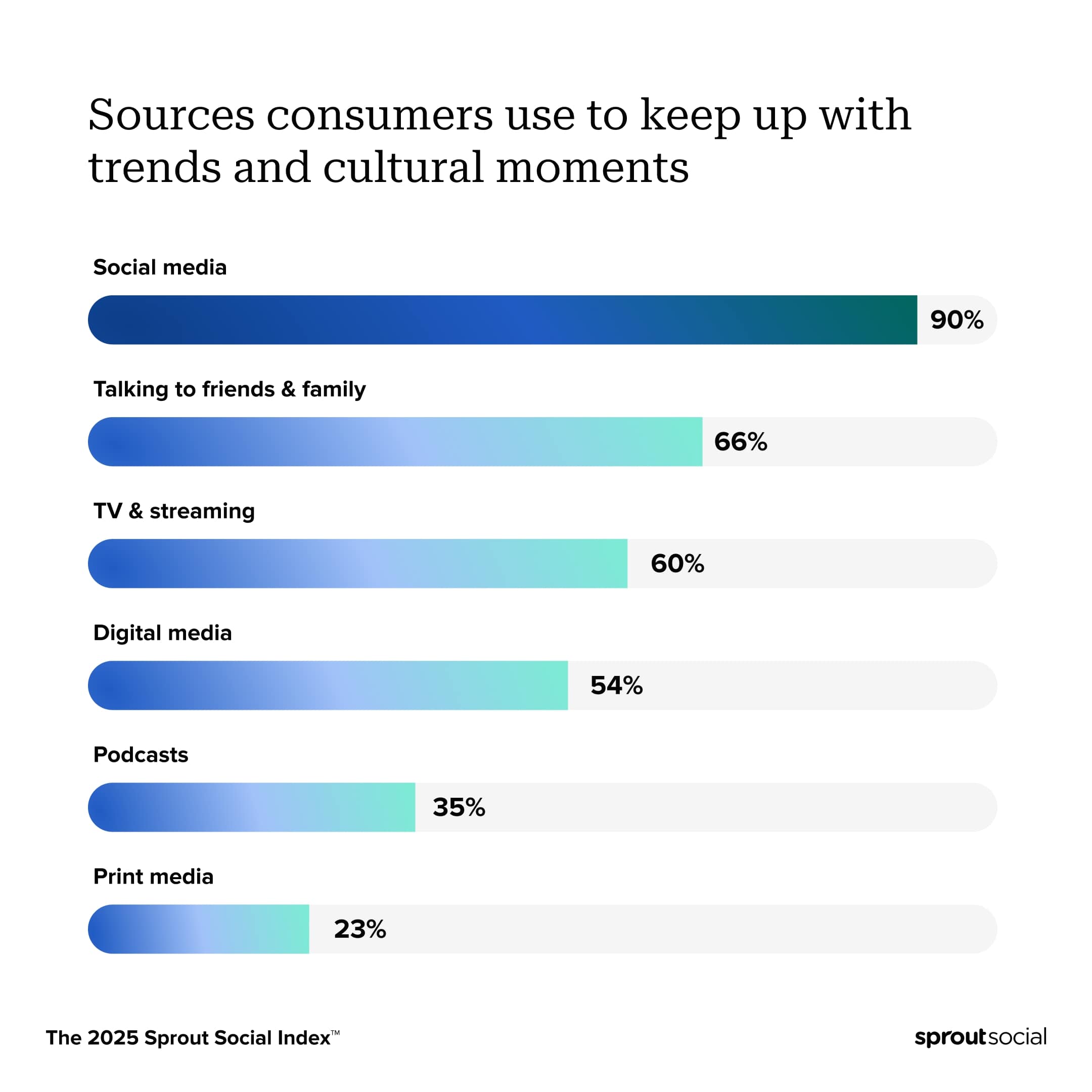
According to the Sprout Social Index™ 2025, a significant 93% of customers believe brands must stay current with online culture. People regularly share their experiences on platforms like X (formerly Twitter), Facebook, Instagram, and community forums such as Reddit. These conversations directly influence how your brand is perceived. The Index further reveals that 90% of consumers utilize social media to stay informed about key moments. This places social media teams at the forefront of protecting and nurturing brand reputation.
A prime example of a brand effectively engaging with online culture is the 2018 KFC #ChickenCrises. When KFC faced a severe chicken shortage, leading to the temporary closure of over 750 stores, customer frustration mounted rapidly. Through social listening, the brand swiftly identified the outrage and responded with an honest, self-aware approach. They famously rearranged the letters “KFC” on a chicken bucket to humorously convey, “We messed up.”
This light-hearted, authentic response successfully diffused tension, protected the brand’s reputation, and even sparked viral discussions. It underscores the critical role of social media professionals in listening, engaging, and collaborating with internal stakeholders to manage reputation challenges before they escalate into full-blown crises.
Trust affects all stakeholders, from consumers to investors; 63% of investors cite it as a critical factor in business decisions, according to the Phillips Group. As a marketing leader, your opportunity lies in proactively building and protecting corporate reputation by engaging with audience conversations and influencing your company’s narrative, wherever it unfolds.
Why Corporate Reputation Management is Critical Today
Your brand’s reputation profoundly influences every facet of your business, from attracting and retaining customer loyalty to securing stakeholder trust and driving sales. Given that reputation is fundamental to overall brand health, damage to it stands as one of the most significant risks companies encounter today.
The classic Harvard Business Review’s Reputation and Its Risks noted that 70-80% of the modern economy’s market value originates from “hard-to-assess intangible assets,” such as brand equity. This implies that any factor detrimental to your brand—be it a negative reputation or a crisis—can significantly impact your entire operation. Contemporary data corroborates this: Aon’s research ranks reputation damage as the eighth biggest risk to companies globally.
Even when a company executes its strategy flawlessly, external factors can still influence its reputation. For instance, in 2025, a Reddit user falsely claimed that GameStop had charged customers for undelivered products following a $1.4 million merchandise heist. Rather than allowing the misinformation to spread, GameStop’s social media team responded quickly and proactively, clarifying that no customer orders were affected. This swift action was pivotal in protecting the company’s reputation and maintaining brand trust.
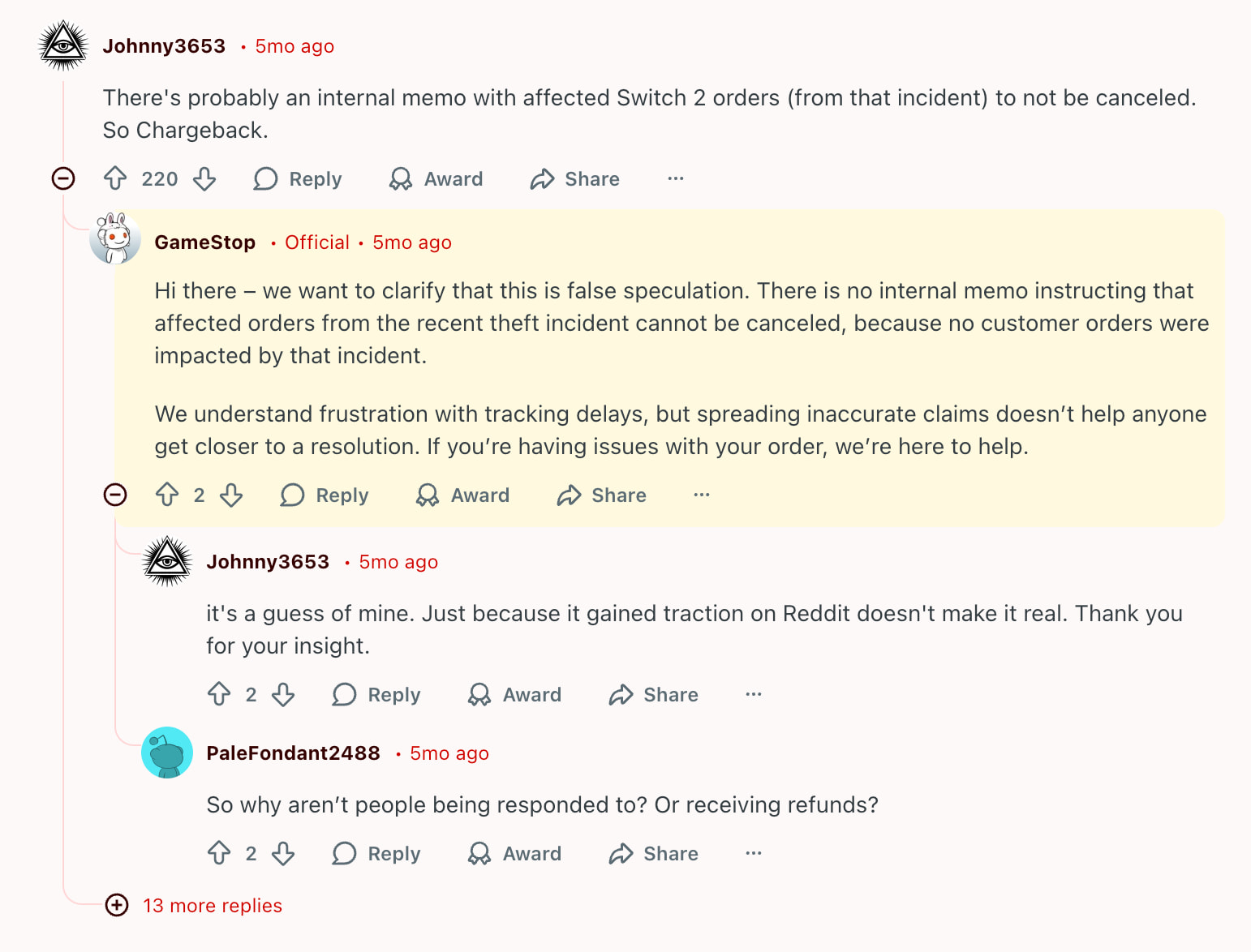
Source: Reddit
GameStop’s quick social media response demonstrated the clear distinction between a minor concern and an escalating crisis. It highlights the indispensable role of social listening in effective **corporate reputation management**.
Leveraging Social Listening for Corporate Reputation Management
Social listening involves more than just monitoring mentions; it's the process of tracking conversations around specific keywords, topics, or brands on social media and the broader web, then analyzing those insights to inform strategic decisions. For corporate reputation management, social listening acts as an early warning system, helping brands detect shifts in public sentiment, identify emerging crises, and understand public perception in real time.
By actively listening, businesses can move from reactive damage control to proactive reputation building. It enables teams to identify influencers, engage with detractors, and celebrate advocates, all while gathering valuable market intelligence. This deep understanding of public discourse is essential for maintaining relevance and credibility.
Practical Strategies for Social Listening in Reputation Management
Implementing social listening effectively for reputation management requires a structured approach. Here are key practical steps:
-
Set Up Comprehensive Monitoring: Configure listening tools to track a wide array of terms. This includes your brand name, product names, campaign hashtags, key executive names, competitors, relevant industry terms, and even common misspellings. Tools like Mention, Brandwatch, and Sprout Social offer sophisticated monitoring capabilities across various platforms.
-
Analyze Sentiment and Identify Trends: Go beyond surface-level mentions. Utilize sentiment analysis features in your listening tools to understand the emotional context (positive, negative, neutral) of discussions. Look for recurring themes or spikes in mentions that could signal an emerging trend or potential issue. Understanding why people feel a certain way is crucial.
-
Implement a Rapid Response Protocol: Develop clear guidelines and an escalation matrix for responding to different types of mentions. Define roles for your social media manager, PR team, legal counsel, and customer service. Having pre-approved responses for common issues can significantly reduce response times during a crisis. Speed and consistency are paramount in online interactions.
-
Engage with Communities Authentically: Don't just observe; participate meaningfully. Respond to customer inquiries, offer assistance, and express gratitude for positive feedback. Engaging in relevant online discussions, such as Reddit AMAs (Ask Me Anything) or Twitter Q&As, can humanize your brand and build goodwill.
-
Amplify Positive Mentions: Actively share positive reviews, testimonials, and user-generated content across your official social media channels and website. This reinforces a positive brand image and provides social proof. Encourage satisfied customers to share their experiences further.
-
Derive Strategic Insights: The data collected through social listening is not just for crisis management. Use these insights to inform broader business decisions. Feedback on products can guide development, insights into customer service issues can improve processes, and understanding market conversations can refine marketing campaigns and messaging.
Real-World Impact: Lessons from Brand Reputation Crises
The effectiveness of social listening in **corporate reputation management** is best illustrated through real-world examples. KFC's handling of the #ChickenCrises in 2018 demonstrated how acknowledging a problem with humor and honesty, informed by social listening, can transform a potential disaster into a viral success that strengthened brand loyalty.
Similarly, GameStop's prompt clarification on Reddit regarding false claims of unreceived products showed the power of direct engagement. By addressing misinformation quickly and transparently, they prevented a rumor from becoming a widespread reputation issue. In both cases, the ability to listen, understand, and respond strategically made a significant difference in preserving brand trust.
Conclusion
In an increasingly digital and interconnected world, proactive **corporate reputation management** is not merely an option but a strategic imperative. The constant flow of online conversations means that a brand's public image is continuously being shaped, for better or worse. By harnessing the power of social listening, companies can gain invaluable insights into public sentiment, swiftly address potential threats, and consistently reinforce a positive brand narrative.
Investing in robust social listening tools and processes, alongside a well-defined response strategy, allows businesses to not only protect their hard-earned trust but also to actively build and strengthen their reputation, ensuring long-term success and resilience in a dynamic market.