Gemini 3 in Search AI Mode: New Updates & Impact
HyppeSocial November 18th, 2025 Google Search
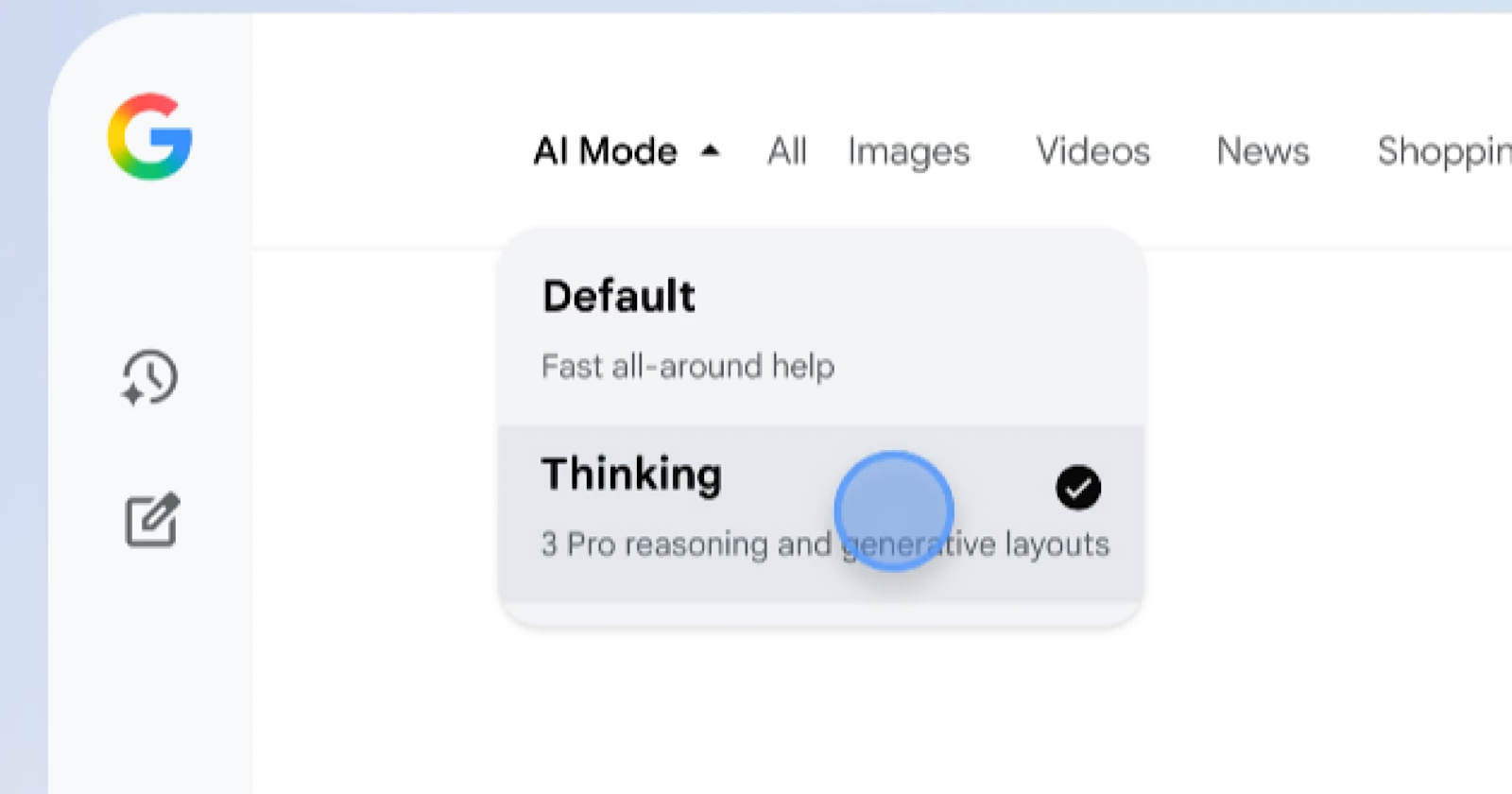
Google has officially integrated its latest language model, Gemini 3 in Search AI Mode, a significant update for how users interact with search results. This marks a notable shift, as it is the first time Google has deployed a new Gemini model directly into Search on its initial release day. For subscribers to Google AI Pro and Ultra in the U.S., Gemini 3 Pro is currently accessible by selecting "Thinking" within the AI Mode's model dropdown. This integration promises deeper reasoning capabilities, enhanced query fan-out, and dynamic generative layouts, fundamentally reshaping the search experience.
Robby Stein, VP and GM of Google Search, confirmed the rollout, stating that Gemini 3, as their most intelligent model, is now available in Google Search's AI Mode. This immediate deployment underscores Google's commitment to rapidly advancing its generative AI capabilities within core search functions. The expansion of Gemini 3 in AI Mode to all U.S. users is planned for the near future, with Pro and Ultra subscribers receiving higher usage limits.
Understanding Gemini 3 in Search AI Mode
Gemini 3 is described by Google as a model exhibiting state-of-the-art reasoning and a profound multimodal understanding. Within the context of Google Search, this translates into an ability to explain complex concepts, address intricate questions, and support interactive visuals embedded directly within AI Mode responses. The model's architecture effectively redefines what constitutes a "helpful response" in the search environment.
Instead of merely presenting a block of text, Gemini 3 leverages new generative UI capabilities to create a response layout tailored precisely to the user's query. This means the AI can decide optimally when to integrate images, tables, or other structured elements, ensuring the answer is not only clear but also more intuitive to engage with. For instance, a search about historical events might yield a timeline graphic alongside textual information, while a query on scientific principles could generate an illustrative diagram.
Enhanced Query Fan-Out Capabilities
A core improvement with Gemini 3 is the upgrade to Google's query fan-out technique. Robby Stein highlighted that Search can now initiate more related searches concurrently and better interpret the user's underlying intent. This enhancement is designed to broaden the scope of information retrieval, potentially allowing Google to discover content it might have overlooked previously.
For content creators and SEO professionals, this development suggests that Google's AI is becoming more adept at understanding nuances in complex queries. The system's ability to perform "much smarter searches" due to Gemini 3's advanced comprehension means that highly relevant, yet perhaps less obvious, web content stands a greater chance of being surfaced. This underscores the importance of producing comprehensive, authoritative content that thoroughly addresses topics, rather than merely targeting singular keywords.
- Deeper Intent Understanding: Gemini 3 helps Google discern the true purpose behind a user's query, leading to more targeted search expansions.
- Wider Content Discovery: The system can explore a broader range of web pages in parallel, increasing the likelihood of unearthing valuable, niche content.
- Increased Relevance: By understanding the query better, the AI is more effective at matching user needs with diverse and pertinent online resources.
Generative UI and Dynamic Layouts
The introduction of generative UI features in Gemini 3 in AI Mode represents a significant evolution in how search results are presented. The model now analyzes a user's question and constructs a customized response, integrating visual elements dynamically. This can include images, detailed tables, or sophisticated grids. When an interactive tool could enhance understanding, Gemini 3 has the capability to generate a small application in real-time and embed it directly within the answer.
Examples from Google's announcement demonstrate this versatility:
- An interactive physics simulation that allows users to explore complex concepts like the three-body problem directly within the search interface.
- A custom mortgage loan calculator, enabling users to compare various options and estimate long-term savings without navigating away from the search results page.
Crucially, all these dynamically generated responses incorporate prominent links to high-quality content across the web. This ensures users can click through to the original source material for deeper exploration, maintaining the web's foundational principle of linking to authoritative information. This feature suggests that while AI provides direct answers and tools, it still values and points to the original content ecosystem.
The demonstration video from Google (as linked in the source) visually illustrates these capabilities, showing how interactive elements are seamlessly integrated into the search experience.
Adapting Content Strategies for Gemini 3 and AI Search
The advancements with Gemini 3 in Search AI Mode have direct implications for content creators, SEO specialists, and digital marketers. The shift towards more intelligent, dynamically generated responses means that traditional SEO tactics need to evolve. Here are practical actions to consider for optimizing content in this new environment:
- Prioritize Comprehensive and Authoritative Content: AI models like Gemini 3 excel at synthesizing information. Content that provides in-depth, well-researched answers to complex questions is more likely to be utilized and cited. Focus on becoming the definitive resource for your niche topics.
- Structure Content for Clarity and Readability: Use clear headings (H1, H2, H3), bullet points, numbered lists, and short paragraphs. This structure makes content easier for AI to parse and understand, improving its chances of being integrated into generative responses.
- Incorporate Specific Data, Examples, and Use Cases: Generalizations are less valuable. Provide concrete examples, statistical data, and real-world scenarios that illustrate your points. This adds credibility and depth that AI models can leverage for factual and practical answers.
- Optimize for Multimodality: Consider how your content might appear visually or interactively. If you publish data, can it be easily pulled into a table? If you explain a process, could it be represented in a diagram or infographic? Think beyond text to include high-quality images, videos, and structured data.
- Address Long-Tail and Complex Queries: With enhanced query fan-out, Google's AI is better equipped to handle nuanced, multi-part questions. Develop content that addresses these specific, often conversational, queries in detail.
- Reinforce E-E-A-T (Experience, Expertise, Authoritativeness, Trustworthiness): In an AI-driven search landscape, the origin and credibility of information are paramount. Ensure your content is produced by credible authors, backed by evidence, and demonstrates genuine expertise. Clearly attribute sources.
- Focus on User Intent Beyond Keywords: While keywords remain important, AI understands intent. Create content that solves problems, answers questions thoroughly, and provides genuine value to the user's underlying need, not just their search terms.
Future Outlook for Search and Content in 2026
Google's plan to introduce automatic model selection in the coming weeks further refines the AI Search experience. This means that challenging questions posed in AI Mode or AI Overviews will be intelligently routed to Google's most advanced frontier models, while simpler tasks will continue to be handled by faster, more efficient models. This dynamic routing ensures optimal performance and accuracy across the spectrum of user queries.
The continuous evolution of AI in search, exemplified by Gemini 3's integration, signals a future where search is more personalized, interactive, and intelligent. For content creators, this necessitates a proactive approach to content strategy, focusing on quality, structure, and adaptability to new generative formats. The goal shifts from merely ranking for keywords to providing the most valuable, synthesizable, and trustworthy information that Google's AI can present to its users.
Conclusion
The integration of Gemini 3 into Google Search's AI Mode represents a pivotal moment in the evolution of online information retrieval. With its deeper reasoning, improved query fan-out, and innovative generative UI, Google is fundamentally altering how users discover and interact with content. For businesses and content producers, understanding and adapting to these changes is critical. By prioritizing comprehensive, well-structured, and authoritative content that caters to complex user intents and leverages diverse media formats, you can effectively position your online presence for success in the AI-powered search landscape of 2026 and beyond.


