Google AI Demand Gen: New Image & Video Tools for 2026
HyppeSocial November 18th, 2025 Google Ads
Google AI Demand Gen: New Image & Video Tools for 2026
Google has recently introduced significant updates to its Demand Gen ad tools, integrating advanced AI capabilities for image and video creation, alongside refined testing and suitability controls. These enhancements, particularly in Google AI Demand Gen campaigns, are set to transform how advertisers develop and manage their promotional assets. Marketers now have more robust resources to generate engaging content, optimize campaign performance, and ensure brand safety across various Google platforms in 2026 and beyond.
Understanding Demand Gen Campaigns
Demand Gen campaigns are designed to capture user interest and drive action by showcasing engaging visuals and videos across Google's most immersive surfaces, including YouTube, Discover, and Gmail. The primary goal is to generate demand, cultivate audience interest, and guide potential customers through the marketing funnel. Historically, creating diverse, high-quality assets tailored for these varied placements required considerable time and resources. Google's latest updates, specifically with its Google AI Demand Gen features, aim to streamline this process by leveraging artificial intelligence.
These campaigns are crucial for advertisers seeking to reach users early in their discovery journey, rather than just capturing existing search intent. By appearing prominently in personalized feeds and video content, Demand Gen ads can introduce new products, build brand awareness, and foster engagement before a specific search query is ever made. The integration of AI tools within this framework directly addresses the need for scalable, adaptable creative content.
AI-Powered Image Enhancements
Google is rolling out several AI-powered image enhancement options for both Demand Gen and app campaigns. These features significantly reduce the manual effort required to produce diverse ad creatives:
- Animated Images: This tool generates moving variations from static image assets. For instance, a lifestyle product photo could be subtly animated to draw more attention in a user's feed without requiring complex video editing software. This can make an ad stand out in visually rich environments like Google Discover.
- Adaptable Designs: This feature automatically adds branded-style text overlays to existing images. Marketers can provide brand guidelines, and the AI will apply consistent typography and messaging. For a retail brand, this means quickly generating multiple product images with promotions or call-to-actions, ensuring visual consistency across various ad placements.
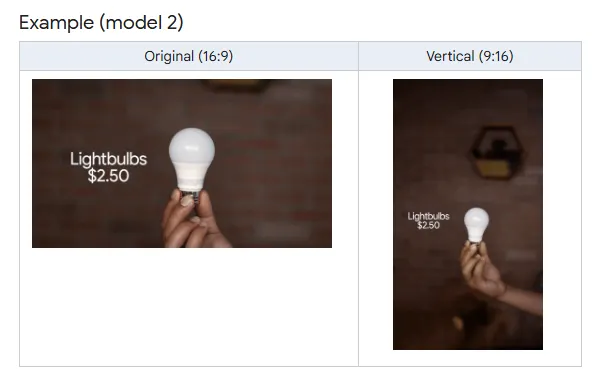
Furthermore, advertisers can now adjust image aspect ratios quickly and easily. This functionality allows a single core image to be automatically resized and optimized for different display environments – whether it's a wide banner on a desktop or a vertical format for mobile Shorts. This flexibility ensures that campaigns can effectively expand across more surfaces without needing bespoke assets for each aspect ratio, saving production time and costs. The AI intelligently crops or re-composes the image to maintain focus on the key elements.
Advanced AI Video Creation
Similar to image enhancements, Google's new video tools leverage AI to create more adaptable and impactful video content. These capabilities are particularly beneficial for maximizing the reach and effectiveness of video ads:
- Automated Orientation Adjustments: The AI intelligently rotates or scales video content to generate new aspect ratios, ensuring optimal fit for different screens and platforms. For example, a horizontal brand commercial can be automatically converted into a vertical format suitable for YouTube Shorts or other mobile-first placements, all while maintaining the integrity and focus of the original content. This prevents awkward cropping or black bars.
- Short-Form Video Generation: Google's AI can now select key moments from longer video content and re-form them into concise, engaging Shorts. This is invaluable for marketers looking to capitalize on the popularity of short-form video content without having to manually edit multiple cut-downs from their primary assets. A 60-second product demo, for instance, could yield several 15-second Shorts highlighting different features or benefits. These additional video versions are automatically published after passing a quality review, further automating the creative process.
These video enhancements allow advertisers to maximize the utility of their existing video assets, extending their lifespan and ensuring relevance across Google's diverse ad inventory.
Optimizing with Asset Uplift A/B Experiments
Google is rolling out Asset Uplift A/B Experiments to Demand Gen campaigns, accessible via the “Experiments” section in your campaign setup. This feature provides a structured environment for testing various elements of your campaigns to identify what resonates most effectively with your target audience. Marketers can now conduct rigorous tests to evaluate the performance of different creatives, audiences, product feeds, and bidding strategies.
For example, an advertiser could test two different sets of AI-generated images to see which delivers a higher click-through rate, or experiment with two distinct video intros to determine which better captures viewer attention. It is important to note that Google explicitly advises against testing budget as a variable within these experiments, as budget changes can significantly skew results and make it difficult to attribute performance differences accurately to other tested elements. By isolating variables, advertisers can gain clear, actionable insights into how to refine their Google AI Demand Gen campaigns for optimal performance.
Enhanced Brand Safety: Suitability Controls
Ensuring brand safety and maintaining brand reputation are paramount for advertisers. Google is addressing this with new suitability controls and expanded excluded content themes for Demand Gen campaigns. These updates offer greater control over where your ads appear, minimizing the risk of your brand being associated with inappropriate or undesirable content.
Advertisers can now specify content categories or themes they wish to avoid, providing a more granular approach to placement management. For instance, a family-friendly brand might choose to exclude placements alongside content related to sensitive social issues or mature themes. This capability is particularly vital in today's digital landscape, where brand perception can be easily influenced by surrounding content. These controls empower marketers to protect their brand equity while still reaching a broad audience through their Google AI Demand Gen efforts.
Leveraging Pathmatics Creative Assets
A significant update is the enabling of Pathmatics-provided images and videos within Google Ads. Pathmatics is a competitive intelligence platform that tracks digital ad spending and creative performance across various platforms. This integration allows advertisers to identify and reuse their top-performing creative assets from other digital advertising platforms directly within Google Demand Gen campaigns.
This feature streamlines the creative development process and improves efficiency. Instead of recreating successful assets for Google's ecosystem, marketers can now simply import and deploy proven creatives. This means an ad that performed exceptionally well on a social media platform, as identified by Pathmatics data, can be quickly utilized within Google's Demand Gen environment, maximizing its potential for success and ensuring a consistent brand message across different ad channels. This not only saves time but also leverages existing performance insights to inform future campaign strategies.
Practical Applications for Marketers in 2026
These updates offer concrete opportunities for marketers to enhance their Demand Gen campaigns:
- Increased Creative Output with Less Effort: Use AI to generate animated images or different video orientations, significantly expanding your creative library without additional design or editing costs. This is particularly useful for small and medium-sized businesses with limited resources.
- Faster Iteration and Optimization: Leverage A/B testing for creatives and audiences to quickly pinpoint what drives engagement and conversions. Instead of guesswork, rely on data-driven insights to refine your ads.
- Enhanced Brand Consistency: Utilize adaptable designs to ensure branded text overlays are applied uniformly across all image assets, maintaining a professional and cohesive brand identity.
- Wider Reach Across Formats: Automatically convert videos into Shorts or adjust aspect ratios to effectively target users on YouTube, Discover, and Gmail, adapting content to where audiences spend their time.
- Improved Brand Reputation Management: Apply suitability controls and excluded content themes to safeguard your brand's image by preventing ad placements next to inappropriate content.
- Strategic Creative Reuse: Import high-performing assets identified by Pathmatics from other platforms into your Google AI Demand Gen campaigns, extending their reach and impact.
Future Outlook for AI in Google Ads
Google's continuous integration of AI into its advertising products, as evidenced by these Demand Gen updates, signals a clear direction for the future of digital marketing. AI is increasingly becoming an indispensable tool for automating creative production, optimizing campaign performance, and ensuring precise audience targeting. These advancements are aimed at making advertising more efficient, effective, and accessible for businesses of all sizes. Marketers who embrace these AI-powered tools will be better positioned to adapt to evolving consumer behaviors and maintain a competitive edge in the dynamic digital landscape of 2026 and beyond.
Conclusion
The latest additions of AI-powered image and video tools, improved A/B testing, updated suitability controls, and Pathmatics integration mark a substantial evolution for Google AI Demand Gen campaigns. These features provide advertisers with powerful capabilities to generate diverse creative assets, optimize performance through experimentation, ensure brand safety, and leverage insights from other platforms. By adopting these tools, marketers can streamline their workflows, enhance ad effectiveness, and achieve better results across Google's expansive network.