Meta Pocket and the Future of Prompt Based Software Design
HyppeSocial July 6th, 2026 Artificial Intelligence
The Aggressive Expansion of Meta AI
Meta is pushing forward with its artificial intelligence roadmap despite the growing public debate over the saturation of synthetic content. The latest move involves the launch of Pocket, an application designed to put generative power directly into the hands of mobile users. This project represents a shift from static media generation to the creation of functional, interactive software through natural language.
The company is effectively testing the appetite for a platform where the barrier between an idea and a working application is reduced to a single text prompt. By moving beyond simple text and image generation, this new initiative seeks to establish a new category of user-generated content that is active rather than passive.
Defining the Gizmo Ecosystem
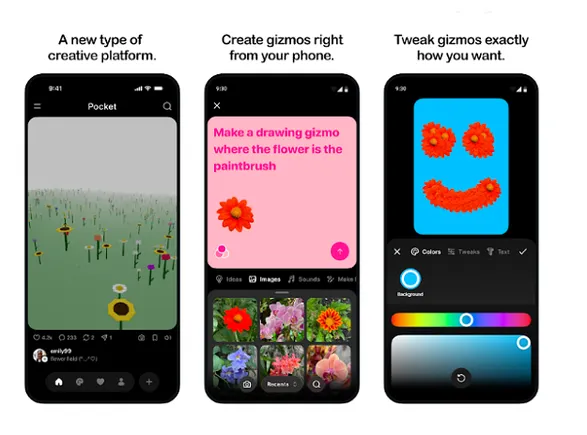
At the core of the Pocket experience is the concept of a gizmo. These are small, interactive digital entities that users can interact with, play, and share within the app's ecosystem. The primary mechanism for creation is simplicity itself: users describe what they want to build, and the underlying AI architecture attempts to manifest that vision into a playable format.
For instance, a user might request a simple physics-based game or a utility tool designed for a specific task. The AI interprets these instructions and builds the logic in the background, bypassing the need for traditional coding knowledge or graphic design skills. This transition from technical development to descriptive prompting is a cornerstone of the company's broader strategy to democratize digital creation.
Social Feeds and Vibe Coding
Pocket functions as more than just a building tool; it is a social network for interactive micro-experiences. The app features a scrolling feed where users can browse, play, and interact with gizmos created by the wider community. This allows for a feedback loop where engagement metrics determine which creations gain visibility.
The social layer includes standard features such as liking and commenting, which are used to curate the experience and highlight high-quality projects. A new term, vibe-coding, has been associated with these projects, suggesting that the value of these creations often lies in their aesthetic or thematic appeal rather than their technical complexity. This reflects a shift in user expectations toward fast, snackable, and highly personalized digital interactions.
The Skill Gap in Automated Creation
While the goal is to make creativity available to everyone, a significant challenge remains regarding the quality of the output. There is a distinct difference between having access to a generative tool and possessing the creative vision to use it effectively. Professional developers and designers spend years refining their understanding of user experience, mechanics, and balance.
The AI can follow a prompt to generate a functional object, but it cannot yet replicate the intuition that comes from deep industry experience. This creates a tension within the platform: the ease of creation may lead to a high volume of content, but much of it may lack the depth required to sustain long-term interest. The gap between a casual prompt and a compelling experience is still substantial.
Potential for High-Value Outliers
Despite the risks of mediocrity, the expanded availability of these tools will inevitably produce some remarkable results. When thousands of people are given the power to experiment without the friction of learning to code, unique ideas that would have otherwise remained dormant can finally be realized. These outliers are what will determine the ultimate success of the platform.
- Individual creators can prototype ideas in seconds rather than weeks.
- Users can iterate on successful concepts through community feedback.
- The platform serves as a testing ground for new types of interactive storytelling.
- Niche utilities can be built for specific communities that professional developers might ignore.
Success for the platform hinges on its ability to surface these high-value projects amidst a sea of basic attempts. If the algorithm can successfully filter for quality and innovation, it could establish a new medium for digital expression that sits somewhere between social media and traditional app development.
Addressing the Content Quality Hurdle
The biggest threat to the longevity of this project is the potential for a flood of uninspired content. If the majority of gizmos are repetitive or lack basic engagement value, users will likely stop scrolling. AI tools are excellent at producing baseline results, but they often struggle to create something truly unique without sophisticated human guidance.
History shows that platforms built on user-generated content only thrive when the top-tier content is exceptional. If there is no incentive for creators to push the boundaries of what the AI can do, the app risks becoming a repository of abandoned experiments. The platform needs to cultivate a community of skilled prompters who understand how to bridge the gap between a basic instruction and a polished product.
The Future of Modular Interaction
Pocket is a clear signal of where the digital landscape is heading. The industry is moving toward a future where the internet is not a series of static pages, but a collection of modular, AI-generated experiences tailored to specific moments and user needs. Whether the general public is ready to embrace this level of AI integration is still an open question.
For now, the project serves as a bold indicator of a long-term commitment to an AI-first ecosystem. By providing the tools for mass creation, the company is betting that the next wave of digital innovation will come from the crowd, powered by the very technology that is currently disrupting traditional creative industries.