Meta Shifting WhatsApp Toward Private Artificial Intelligence with Incognito Chat
HyppeSocial May 14th, 2026 Artificial Intelligence
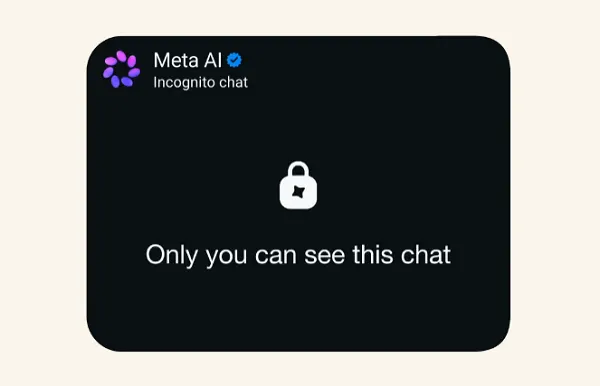
The tension between artificial intelligence and personal privacy has reached a breaking point. For years, the price of utilizing advanced large language models has been the surrender of personal data. Every prompt and every sensitive query traditionally served as fuel for model training. Meta is now attempting to disrupt this dynamic by introducing Incognito Chat for its AI assistant within WhatsApp, marking a departure from the standard data-harvesting practices of the industry.
This development is not merely a feature update; it represents a fundamental change in the architecture of user-AI interactions. By implementing private processing, Meta is allowing users to engage with its chatbot in a secure silo that remains inaccessible even to the company itself. The messages within these sessions are temporary and are specifically excluded from the datasets used to refine future versions of the AI.
The Shift Toward Private Intelligence
The core of this new functionality lies in its alignment with the existing privacy standards of the messaging platform. When a user activates an incognito session, they are effectively entering a vault. The digital footprint of the conversation is designed to vanish the moment the interaction ends. This addresses a significant barrier for professionals who have avoided AI tools due to the risk of exposing proprietary information or sensitive client data.
Meta recognizes that users are increasingly turning to AI for help with complex life situations. People are asking questions about personal health, financial planning, and legal dilemmas. Without a private channel, these users are often hesitant to be fully transparent with the technology. By removing the surveillance aspect, the platform is positioning its AI as a trusted confidant rather than just a data collection tool.
The Safety Paradox of Encrypted AI
While the privacy gains are undeniable, this transition creates a significant challenge for safety and accuracy. Artificial intelligence is famously prone to hallucinations—instances where the model generates false information with absolute confidence. In a standard, monitored environment, these errors can be audited and corrected over time. In an incognito environment, the AI operates without any external oversight or quality control.
The absence of monitoring raises critical questions about corporate responsibility. If a user asks for health advice in a private chat and the AI provides a dangerous recommendation, there is no mechanism for Meta to intervene or even know that the error occurred. The stakes are notably high when considering the potential for misuse. Without the ability to review logs, the platform may find it difficult to prevent the AI from being used to facilitate illicit activities or generate harmful content.
- The inability to audit private sessions makes it difficult to improve model accuracy for niche topics.
- Safety guardrails must be robust enough to function autonomously without human review.
- Users assume a higher level of personal risk when acting on unverified advice in a private window.
- The lack of data retention prevents the AI from learning from its own mistakes in real-time.
Multitasking with Side Chat Integration
Alongside the privacy overhaul, the introduction of Side Chat aims to increase the utility of the AI during active conversations. This feature allows the assistant to sit at the edge of existing threads, providing information and context without forcing the user to leave their current chat window. It is a strategic move to make the AI an invisible layer of the communication experience.
This integration reflects a broader trend toward reducing friction in the digital experience. By allowing the AI to assist in a peripheral capacity, Meta is encouraging more frequent, casual usage. Whether it is fact-checking a statement in a group thread or getting a quick translation, the goal is to make the AI as essential as the keyboard itself.
Redefining the User-Platform Relationship
The move toward private-by-default AI signals a new era in the competition for digital dominance. As the public becomes more aware of data practices, platforms that offer the strongest privacy protections will likely secure the most loyal user bases. Meta is betting that the trust earned through incognito modes will outweigh the loss of training data.
This shift forces a re-evaluation of how AI value is calculated. If the most valuable data is now hidden behind encryption and incognito windows, the companies that can build the most effective models without constant human supervision will lead the next generation of tech. WhatsApp is no longer just a messaging app; it is evolving into a private portal for the intelligence-driven web.